Nevermind
Nevermind
Développé et édité par le studio indépendant Flying Mollusk, Nevermind est sorti le 29 septembre 2015 sur PC (Microsoft Windows), Mac, Xbox One ainsi que sur les plateformes de réalité virtuelle SteamVR et Oculus Rift. Propulsé par le moteur Unity, ce titre classé dans les genres aventure et indépendant propose une expérience de thriller psychologique renforcée par la technologie de biofeedback, proposée au tarif de 16,79 euros.
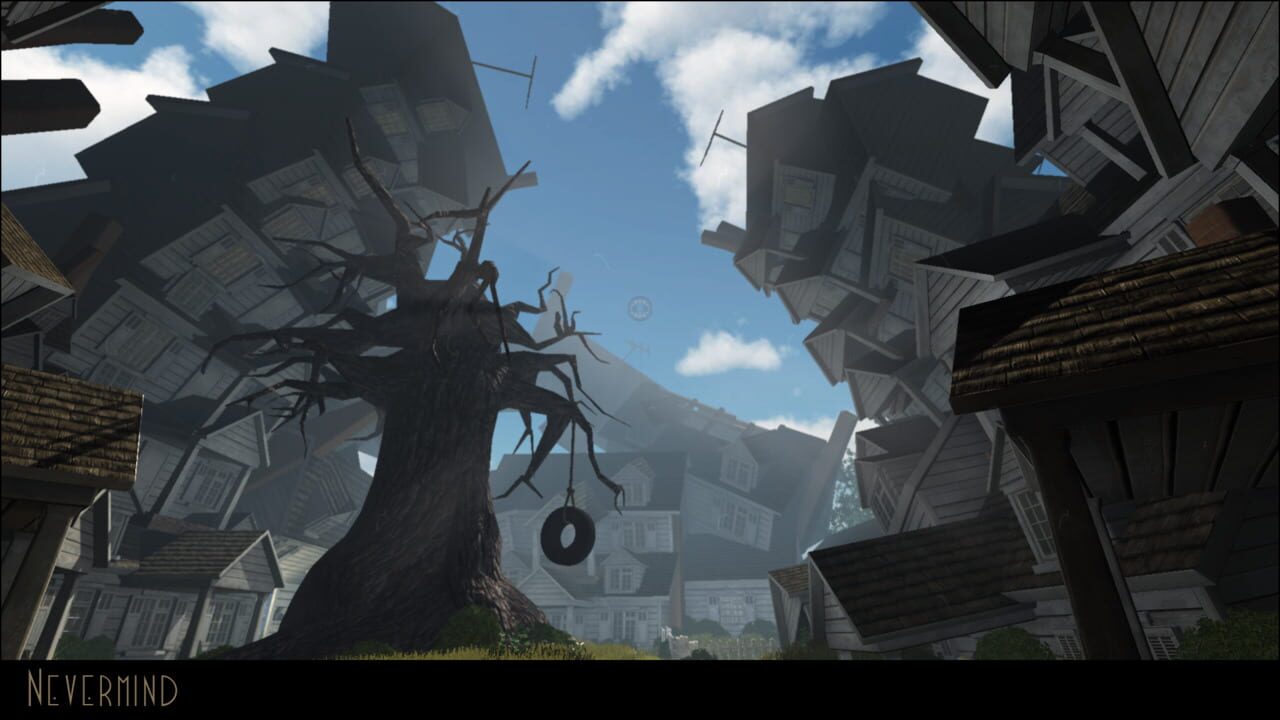
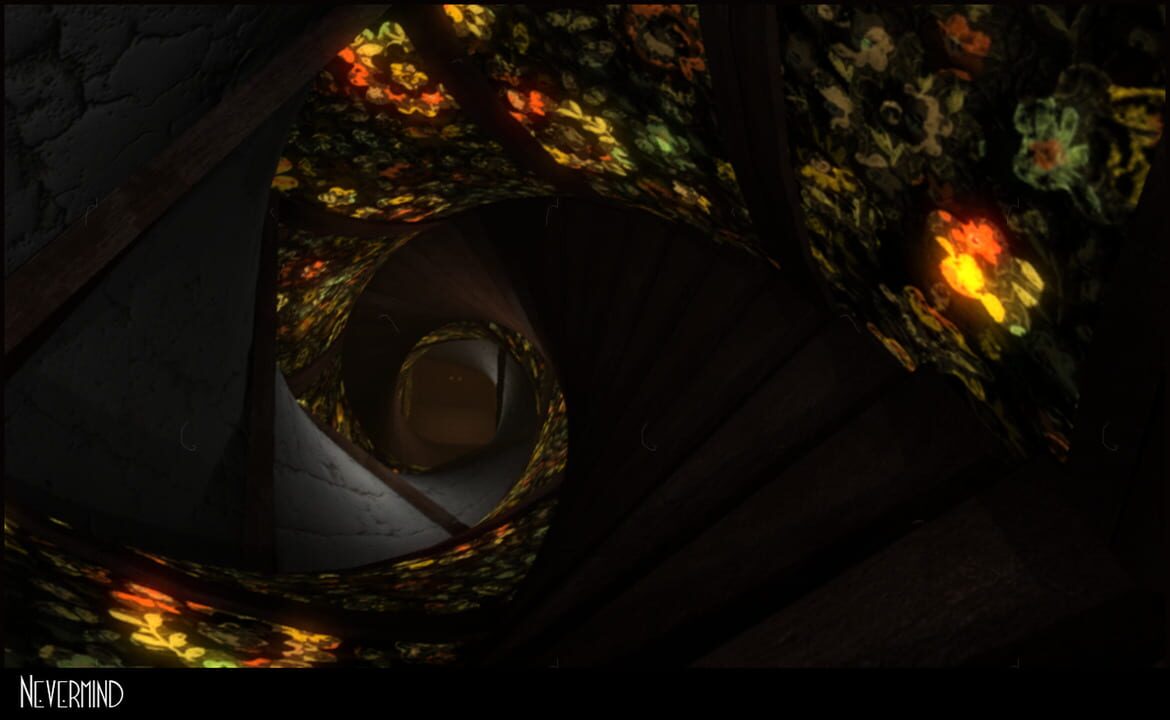
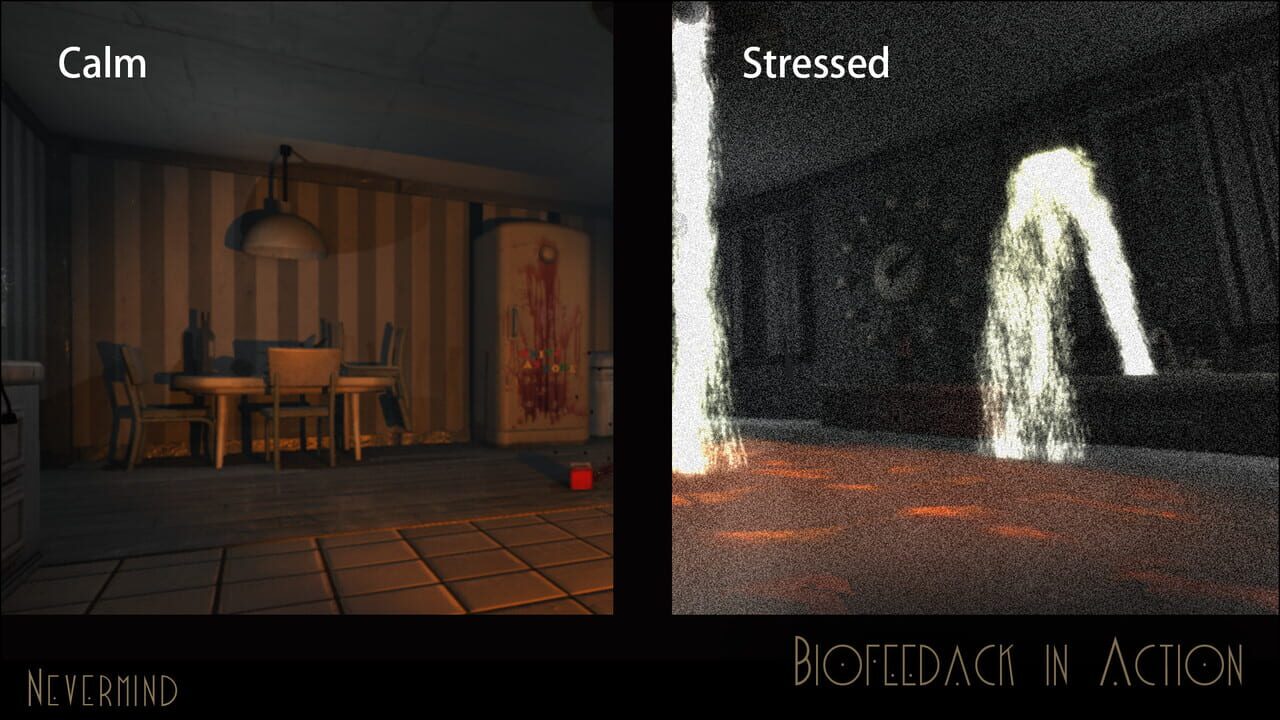
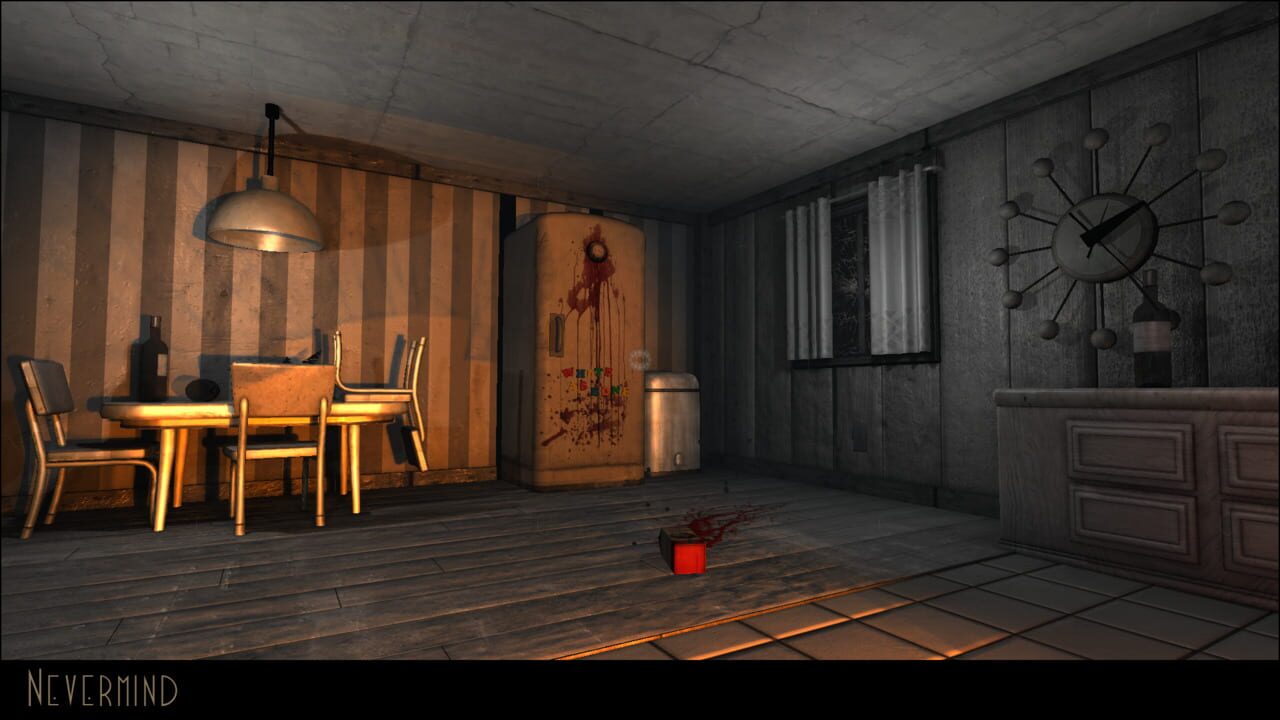
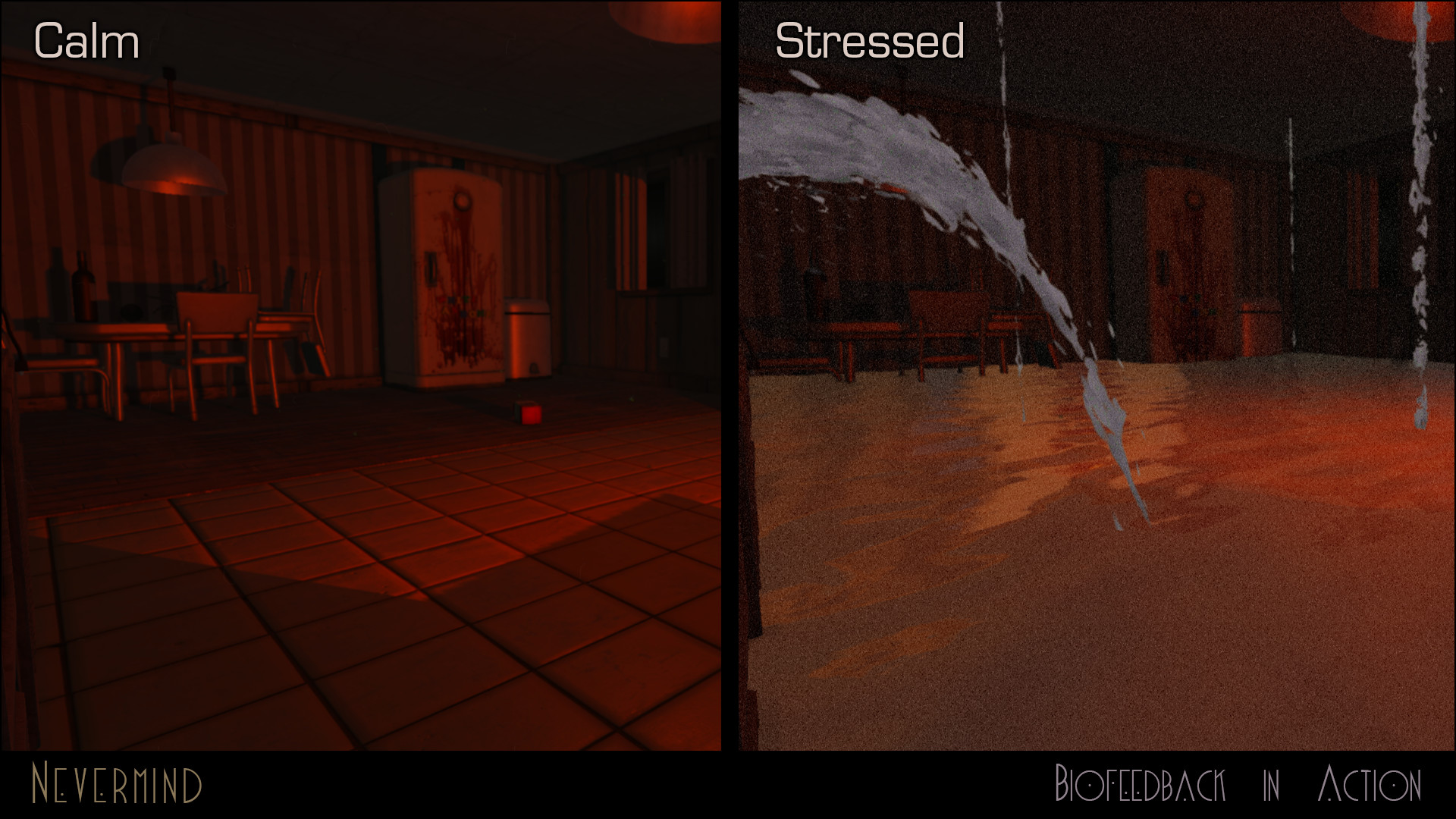
Le jeu plonge le joueur dans des mondes sombres et surréalistes représentant l'esprit de patients victimes de traumatismes. L'originalité du projet réside dans son système de biofeedback optionnel : grâce à une webcam standard utilisant la technologie Affdex d'Affectiva, ou via des capteurs physiologiques compatibles tels qu'Intel RealSense, Apple Watch, moniteurs cardiaques Garmin ou Mio, le logiciel surveille en temps réel le niveau de stress et d'anxiété du joueur. Si la peur prend le dessus, l'environnement de jeu devient plus difficile ; inversement, le calme rend la progression plus clémente. Cette mécanique vise à apprendre la gestion du stress, bien que le jeu reste intégralement jouable sans aucun capteur, se réduisant alors à une aventure atmosphérique d'exploration et de résolution d'énigmes. Le titre intègre également le suivi oculaire via le contrôleur Tobii EyeX, débloquant du contenu additionnel, et prend en charge l'éclairage Razer Chroma. Côté manettes, la compatibilité se limite aux modèles filaires Xbox 360, Xbox One et certaines Logitech, un clavier restant nécessaire pour l'entrée de texte lors de l'inscription.
Sur le plan de l'accueil critique, Nevermind obtient une note moyenne de 67 sur OpenCritic et une note agrégée de 73,50. La presse spécialisée a livré des avis partagés : TrueAchievements juge l'expérience horrifique « un peu médiocre », regrettant que l'absence de danger réel retire de la tension aux niveaux principaux, tandis que GameSpew estime que le jeu parvient à captiver malgré ses défauts, offrant une force visuelle et thématique qui ne satisfera pas les amateurs d'horreur hardcore. Du côté des joueurs, les retours soulignent l'intelligence du propos sur la santé mentale, citant des statistiques de l'OMS, et la singularité de la technologie de biofeedback, bien que certains notent que les ennemis sont « inoffensifs » une fois compris. D'autres avis sur Steam saluent une « pépite méconnue », visuellement aboutie et portée par un background psychologique solide. Une mention légale accompagne le produit : n'ayant pas été évalué par la FDA, il ne constitue pas un dispositif médical et ne saurait diagnostiquer, traiter ou guérir une quelconque pathologie.
Médias




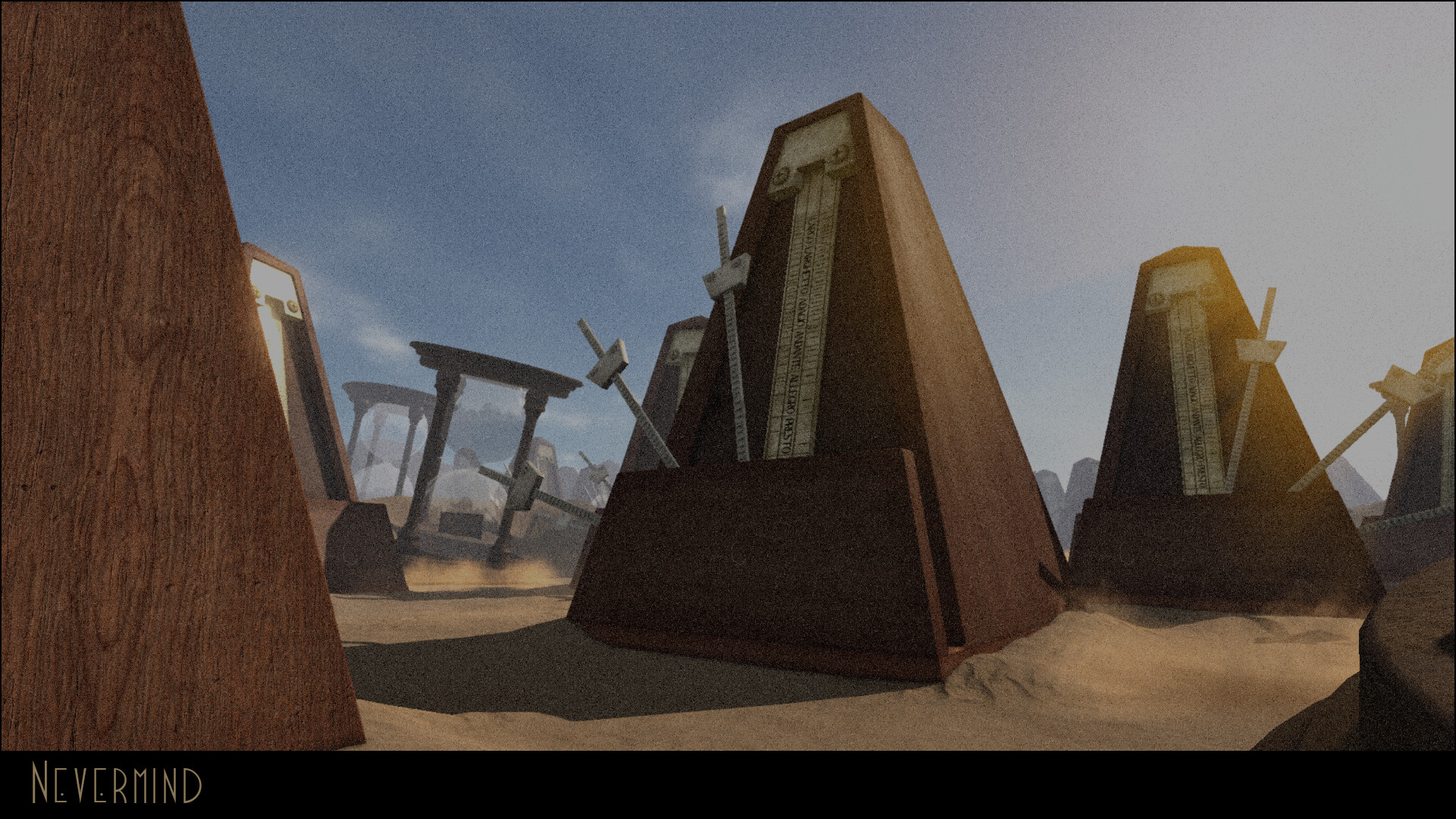
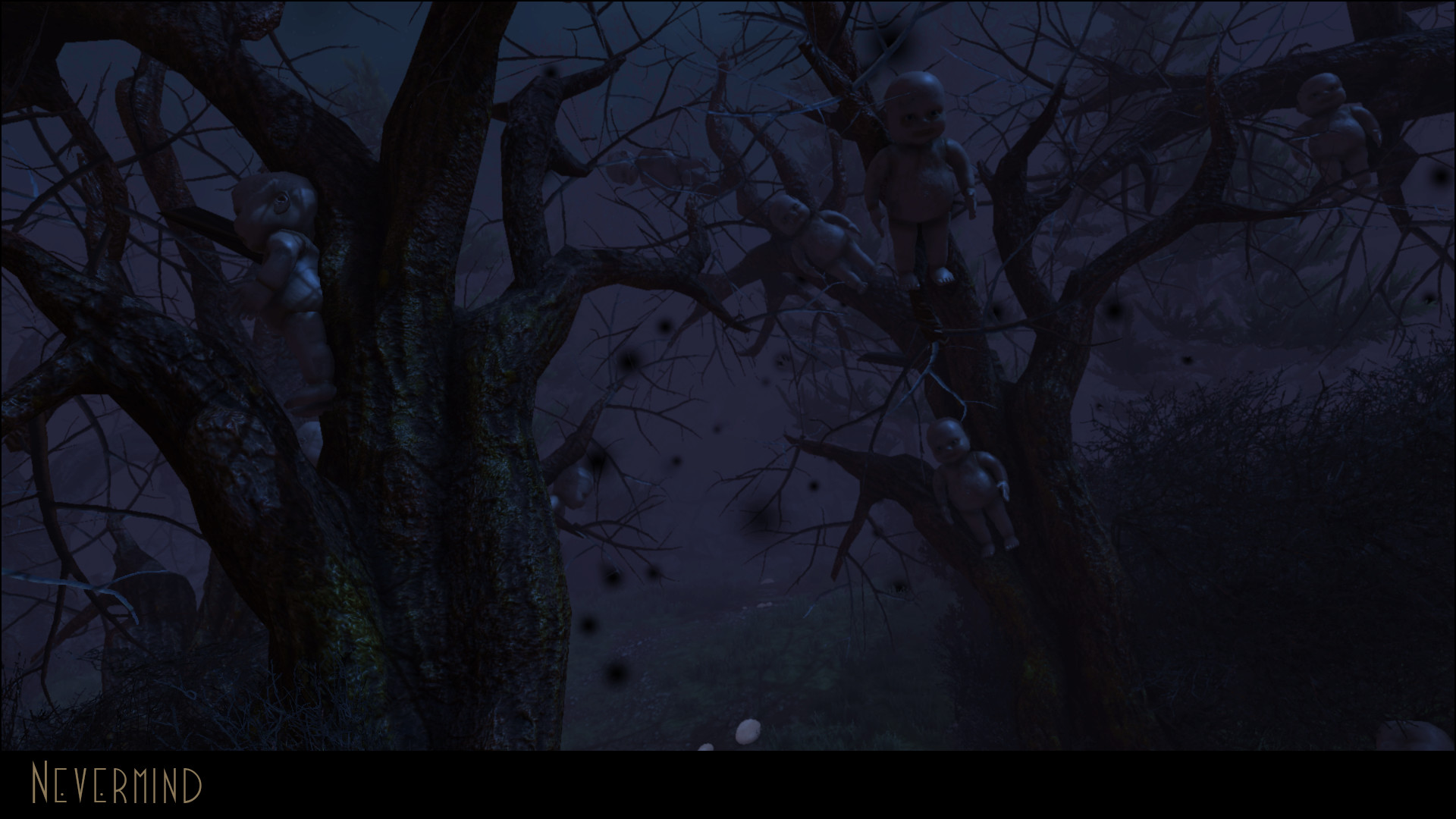
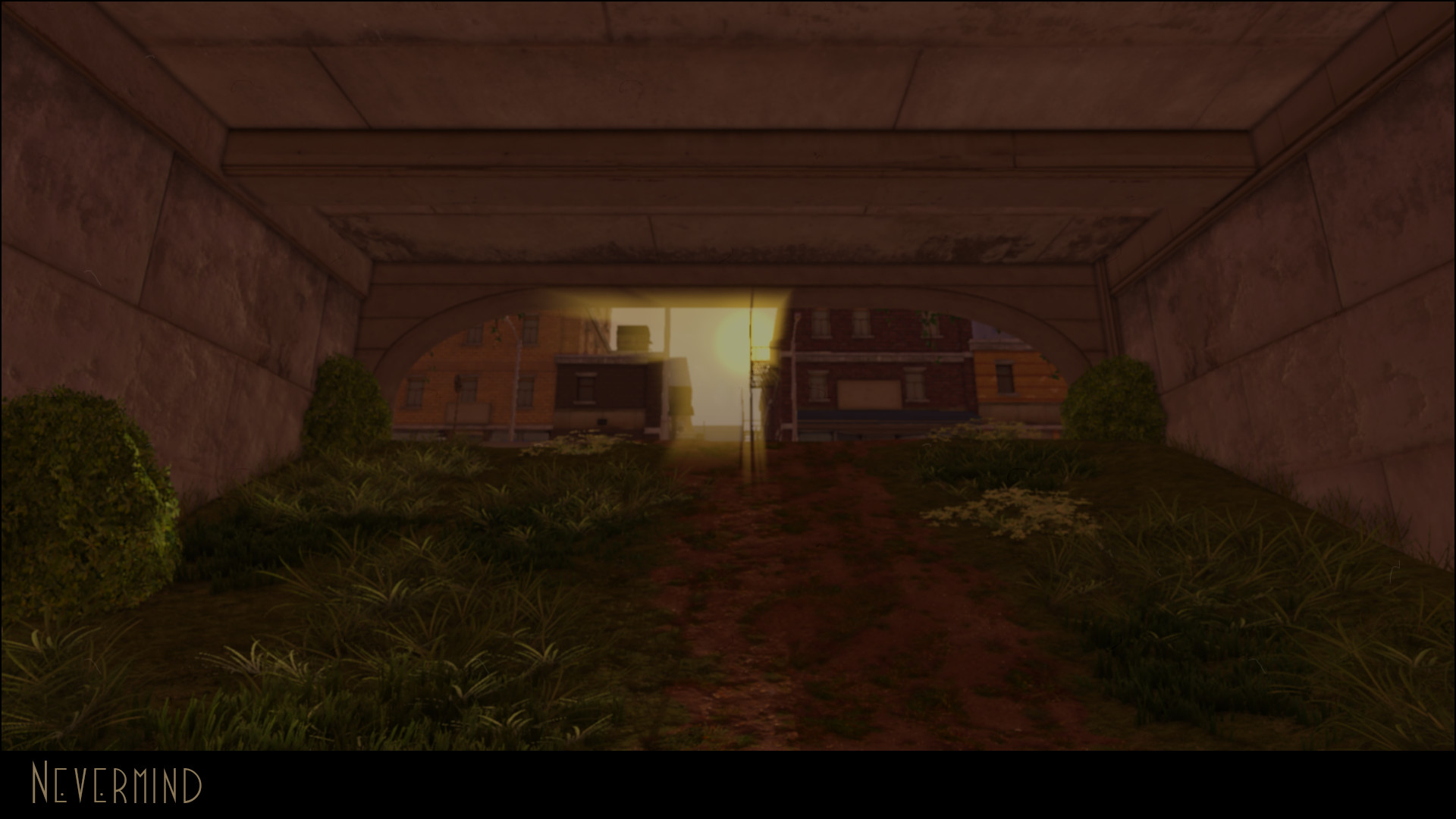
Avis des critiques et joueurs
Critiques de la Presse (Metacritic)
« As a horror game, Nevermind is a bit mediocre. While there's a well-built uneasy atmosphere throughout the main levels, the lack of danger does remove a lot of the potential for being scared. »
« If you let it gets its hooks into you, you’ll be able to tolerate its flaws. While it won’t sate hardcore horror fans, Nevermind is visually and thematically striking enough to be worth a look. »
« What’s lacking is an overall narrative. You simply help one patient after another, but there’s no overarching storyline aside from getting a thank you note once you’ve helped them via your neuroprobing. You don’t even see anyone in your facility, making the setting feel a little too sterile at times. If you can deal with its' obvious flaws, obtuse puzzles, and lack of meaty ‘gameplay’, Nevermind is truly a unique title worth checking out if you want to see some astonishing imagery, some of which there is a good chance that you've never seen anything like it. »
« It is inevitable to think that the game is a great but wasted idea with some highlights that save it from total and absolute burning. The difficulty of their puzzles is between very hard and very simple and at times it is extremely tedious. For Xbox One players with Kinect, you have the option to use it in this game. »
« The stories being told felt sincere and deal with issues you just don’t find in games; especially the fourth patient, a trans-gendered individual in a physically abusive relationship. What hurts this experience is the actual puzzles, which make up the bulk of the gameplay. I just wish more effort was put into developing more meaningful puzzles that were designed to be more intuitive and actually fun to solve. »
« There are several interesting ideas for puzzles, but they are poorly implemented, and the lofty technical ambitions are let down by poor performance. All in all, Nevermind struggles to elevate itself above mediocrity, but that doesn't mean that it isn't worth your time. »
« The story has its moments but the puzzles, horror elements and glitches are so severe that it prevented me from enjoying the game. »
Avis des Joueurs (Metacritic)
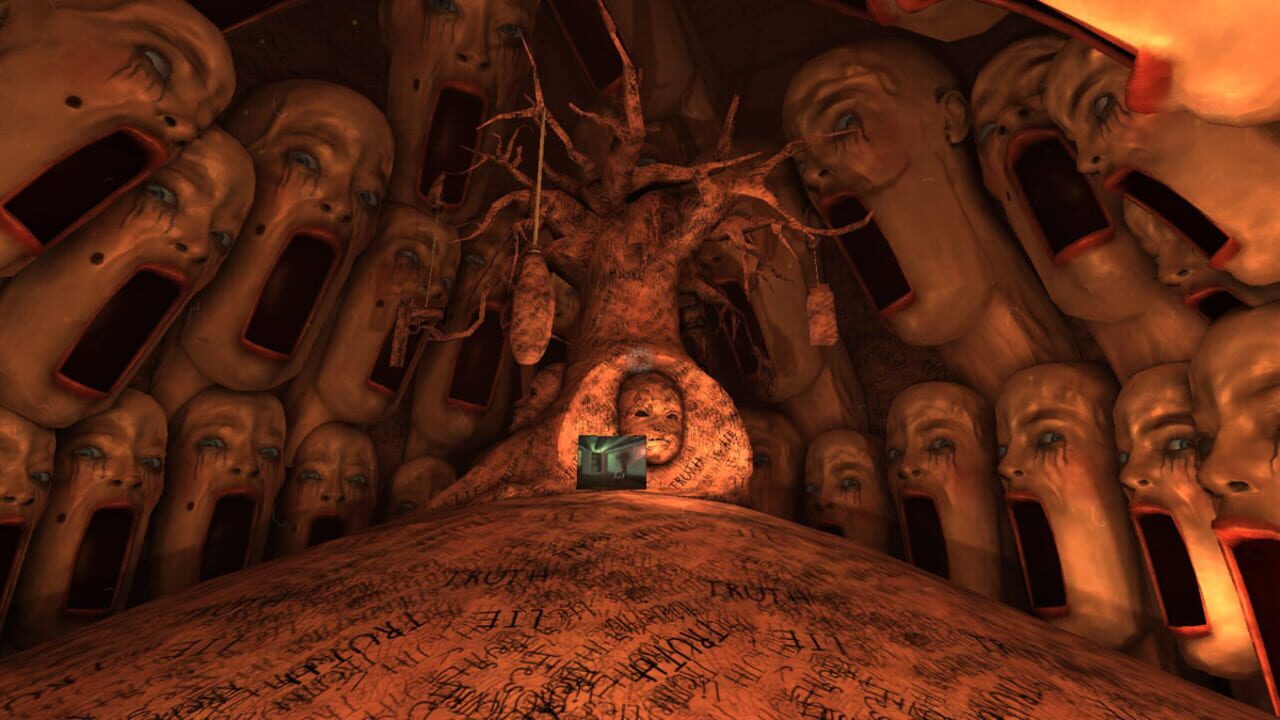
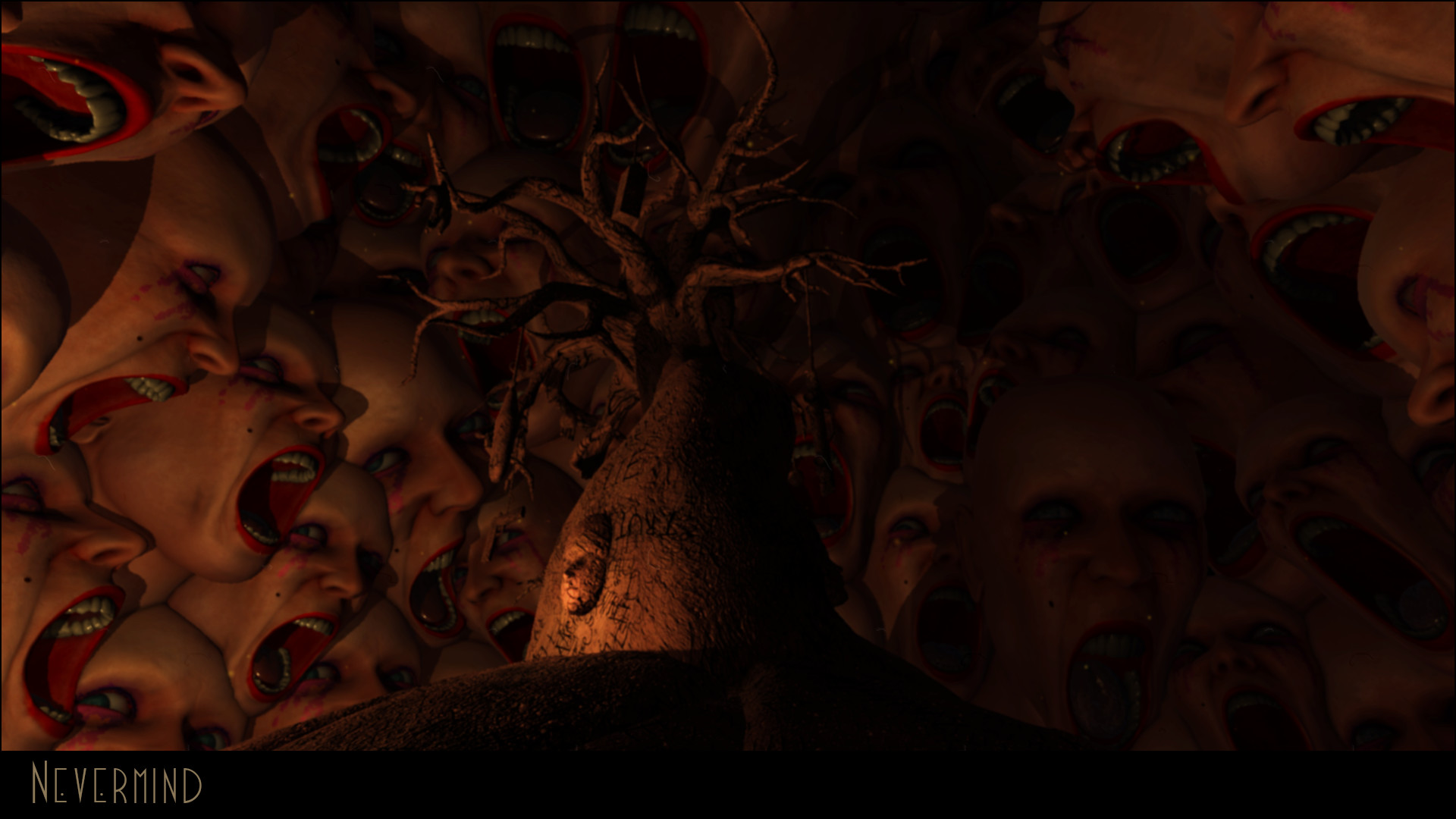
« According to the World Health Organization, one in four people will battle a mental disorder in their lifetime. In the US alone, 3 million of those people will be afflicted with anxiety disorder annually. This illness affects each individual differently; for some, it’s just an uncomfortable feeling during certain events or activities, but for others it’s a crippling fear that makes day to day life unbearable. Either of the scenarios can be brought on by deep seeded trauma that the brain suppresses by blocking out the memory from the subject’s mind. In Nevermind, you’ll take on the role of a doctor that has a device that will allow you to jump inside of patients’ memories and uncover the repressed memory preventing them from moving on with their lives. The game will have you jump into the memories of 5 different subjects, each of whom suffer from various fears that were brought on by past trauma, some of which are coupled with other more prevalent mental disorders. The memories that you will explore are highly detailed mixtures of how they thought the situations played out, mixed with more nightmarish thoughts of how or what caused the memory to be blocked. You’ll need to find a total of 10 photos in each memory, and at their conclusion you’ll piece together what was real, what was imagined, and what order the events occurred in. Along the way you will be tasked with completing some puzzles, which for the most part will simply involve moving or rearranging items in the game world. While they are simplistic in nature, these are well thought out and do occasionally require the player to think outside of the box. The only exception to this is the final puzzle of the game, which requires you to match defaced photos in a specific pattern, which I found to be a bit difficult. The title’s distorted visuals are a high point with its dream state meets nightmare presentation. Many of the environments will twist and distort right in front of your eyes, akin to Layers of Fear, but typically in a much more severe way, almost appearing as an area ripped from Silent Hill. While Nevermind is not an outright horror title, many of the images will haunt you for days after completing the game. The room full of distorted, screaming faces, or the pews lined with rows upon rows of macabre faces that follow you as you navigate the room were much more disturbing than the jump scares that pop up here and there. This game can be played on PC or VR using a heart rate monitor which is supposed to increase or decrease the tension experienced throughout the title utilizing biofeedback. Sadly, I played the version on Xbox One which does not offer these options, so I didn’t get to experience this. Having spent a few hours with the version absent of this feature, I can imagine that this would make it a much tenser affair. Navigation within the world is very accessible, as the controls are extremely basic. You’ll only use a handful of the buttons on a standard gamepad, with the only issue being the movement speed, which runs at a turtle’s pace. While you can take as much time as you want to explore the areas and are not facing any sort of timer, there are occasional areas that can “kill” you if timed incorrectly. Death does not carry much of a penalty outside of warping you to the beginning of the area with your progress intact, but you will get tired of slowly walking back to your destination if death occurs too often. The title does lack replay options, offering only 5 patients to interact with and a handful of more relaxing areas to explore if you so choose. Despite being able to revisit each level to view additional memories which are only available once you complete the levels, these can be viewed from the main terminal in your office after the fact and provide some additional backstory as well as additional achievements for those that care. That being said, completionists will have to complete each level twice to net a 100%. With so many walking sims in the vein of Nevermind on the market, few offer the insight into real disorders like this. Despite its few shortcomings, I would wholeheartedly recommend this to anyone looking for a good, not so threatening option in the horror genre, or to maybe gain some insight into what it is like to suffer from anxiety. »
« Though listed as a horror/ thriller game on the xbox one marketplace, once you figure out the foes in this game are toothless (though occasionally disturbing looking), the game is not as fun to enjoy as it is when you first start playing. That being said, it's a good bit of fun for what it is, and visuals and environments within it are both disturbing and beautiful, adding to the feel of the game as a whole. As a neuroprober, you're tasked with entering the human psyche of four different patients (There are five levels, but the first is introductory) and curing them of their ailments, ranging from Alzheimers to abuse from a significant other. to do this, you just uncover 10 pictures within their mindscape, and these pictures hold the key to solving their problems. An interesting concept, but it is not fleshed out any more throughout the story. In fact, there is no real story to speak of, other than you are a doctor curing people. While I can forgive the lack of concrete story with the excellent visuals within these episodes, What I had a real problem with within the game was the lack of feeling scared while playing, especially when it is advertised as a horror game and it states in the intro level that the next levels undertaken will be much more terrifying and challenging (which I didn't find to be true). Because of this, the levels all play very similarly. I found the intro to be the most scary level as I didn't know what to expect and there were foreboding dark environments and some jump scares to keep me on edge, but by the second or third 'client', I had learned that the scariest part of the game was the atmosphere it presented, not the enemies within. The music was a good touch as it was unnerving at parts, but once again when I had learned nothing was going to scare me that bad or even hurt my in-game character all that much, it became lost in the background. Another problem I had was with the length of the game; it felt much too short. with just five main levels to the game, it can easily be beaten in a night. and while the other four features are nice touches no doubt, they can only really be explored once or twice as boundaries within the levels give you a limited area to uncover. That being said, they were a nice and refreshing break from the main levels, where your path was laid out for you. Here in these levels, you didn't have to worry about finding the 'mind pictures' as in the others, and could just explore, no matter how small the areas might have been. In conclusion, while it didn't exactly live up to what it promised to be in the description on the xbox one marketplace, the environments of the game were interesting, detailed and unexpected enough that it warrants at least one playthrough. »
« I really liked this game a lot. It was quite different and very engaging. I got the sense that there may be more to come from this title and I welcome that. I found the environments and the stories very compelling and would love to have more from this team. »